Putrajaya Command Centre (PCC)
The Central Nerve Centre of Smart Putrajaya Operations
Overview
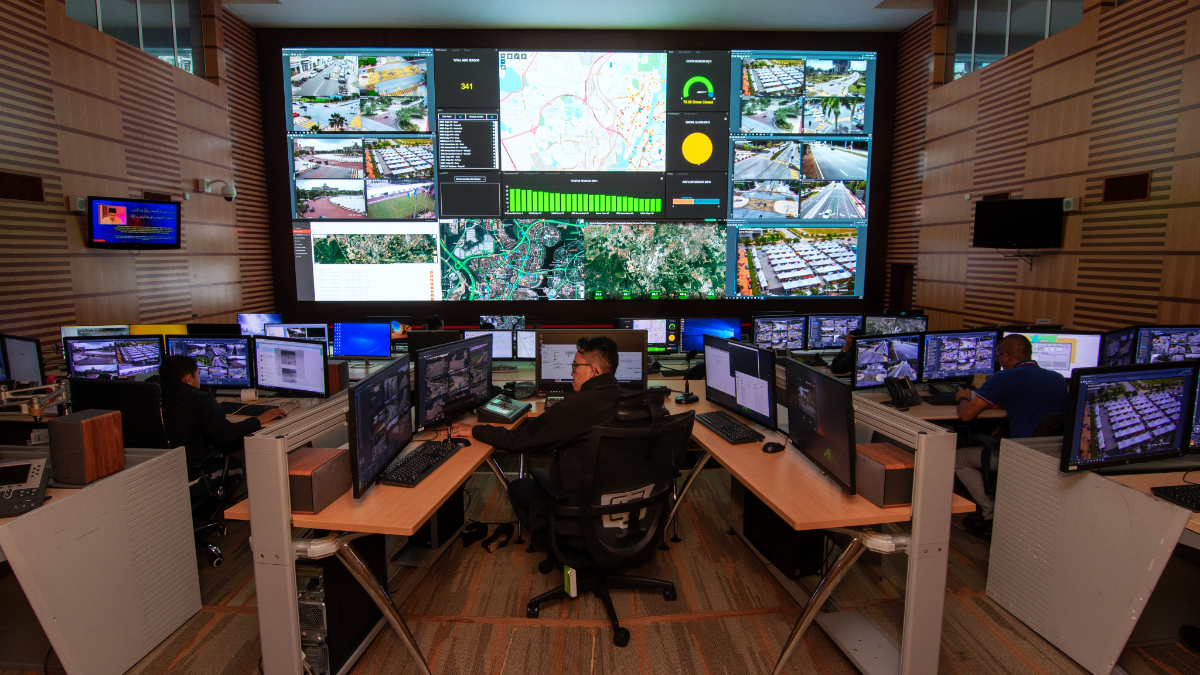
The Putrajaya Command Centre (PCC) serves as the pioneering integrated smart city operations center in Malaysia, functioning as the centralized nerve centre for the administration and management of the Federal Government’s administrative capital. Developed under the Smart Putrajaya framework, the PCC consolidates city surveillance, emergency response, municipal maintenance, and multi-agency coordination into a unified operational environment. Moving beyond reactive monitoring, the PCC is a strategic asset driving Putrajaya’s transition from a “Smart City” to a “Wisdom City”—utilizing predictive data analytics to support municipal decision-making and elevate public service delivery.
1. Centralized Data Integration & Aggregation (IOC)
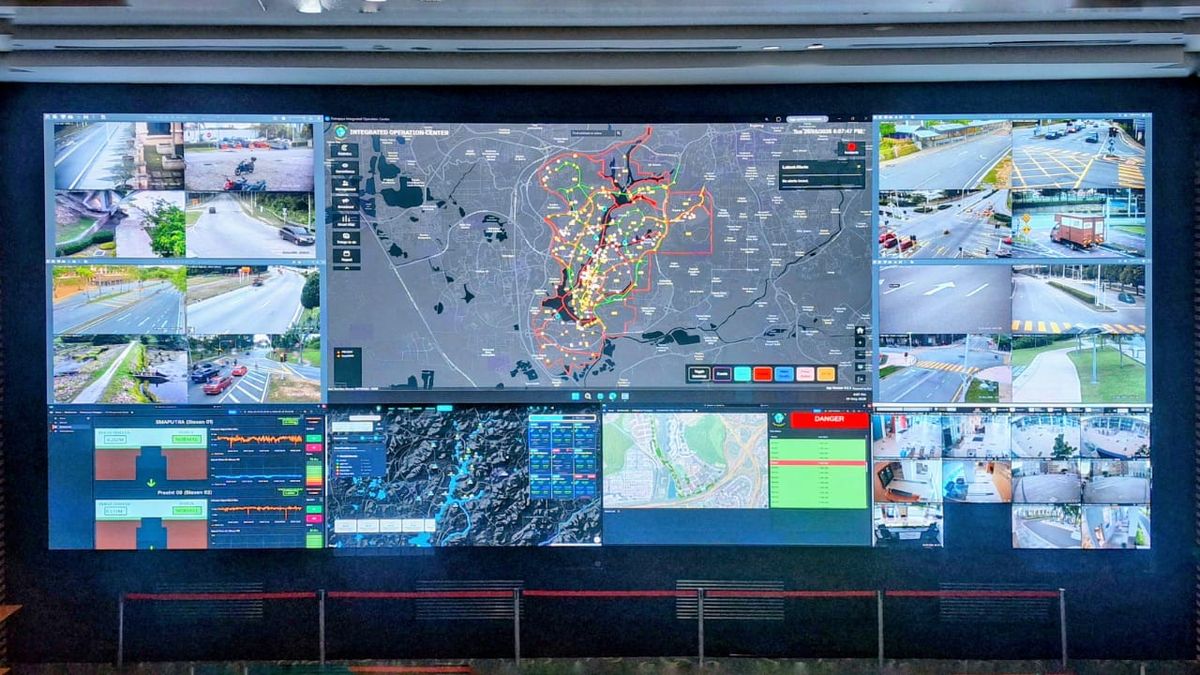
The technological foundation of the PCC is the Integrated Operation Centre (IOC) platform, a centralized system that aggregates, synchronizes, and visualizes municipal data from previously siloed applications. Operating from a state-of-the-art facility featuring a high-clarity 1.5 mm Fine Pitch LED video wall, the IOC provides operators with a single pane of glass to monitor and coordinate critical city functions.
Core Systems Integrated:
- Integrated Operation Centre (IOC): The central dashboard for real-time visualization, cross-system correlation, and decision support.
- Sistem Amaran Banjir: An IoT-based flash flood warning system using LoRaWAN water-depth sensors that automatically triggers alerts to the PCC and broadcast channels if threshold levels are breached.
- Smart Traffic & SCATS Upgrade: Monitors and controls traffic flow via the Sydney Coordinated Adaptive Traffic System (SCATS) across 140 intersections, dynamically adjusting green phases to optimize traffic throughput.
- Putrajaya Information System (PIS) & PGS: Integrates Parking Guidance Systems (PGS), Variable Message Signs (VMS), and Outdoor LED Screens (OLS) to manage traffic distribution and public guidance.
- Smart Pedestrian Crosswalk: AI-based crosswalks featuring computer vision to detect pedestrian presence and traffic violations, flashing real-time audio-visual alerts to drivers to prevent accidents.
- Smart Toilet IoT System: Tracks occupancy, air quality, cleanliness levels, and maintenance alerts across 8 flagship public toilets, centralized on a municipal dashboard.
- Centralized Electronic Bulletin Board (CEBB): A public broadcast network containing 96 smart displays and 10 LED billboards, centrally managed via the Magic Info digital signage platform.
- Integrated Environmental Monitoring System (IEMS): Collects microclimate data (rainfall, radiation, temperature, humidity) and water quality telemetry across critical catchment areas (Presint 1, 2, 5, 7, 9, 11, 13, and 14).
- Smart Street Lighting: Manages lighting assets and feeder pillars in Presint 15 with automated outage detection for rapid ticket dispatch.
- Smart Tree Inventory & Risk Monitoring (STI): Manages 29,000 trees as digital twins using LiDAR, AI risk profiling, and IoT inclination sensors to detect structural risks and prevent falls.
2. Advanced Situational Awareness
The PCC maintains continuous real-time awareness of the capital’s physical security and environmental status:
- AI-Enabled Video Surveillance: Coordinates 553 CCTV cameras equipped with Intelligent Video Analytics (IVA). Algorithms automatically detect specific incidents including line-crossing, crowd gatherings, loitering, left-behind items, and automated License Plate Recognition (LPR).
- Emergency Panic Buttons: A network of 97 emergency panic buttons located in high-traffic public areas allows citizens to establish direct two-way audio-visual communication with PCC operators in real-time.
- Dynamic Notification Workflows: Visual alerts from environmental sensors, panic button triggers, and crowdsourced incident data (e.g., from the Waze Connected Citizens Program) are geo-mapped in the IOC, allowing operators to verify incidents using nearby camera feeds.
3. Incident Command & Control (C&C)
The PCC serves as the central command node during crises and daily operations, operating under strict inter-agency Standard Operating Procedures (SOPs):
- Operator Client (OC) Distribution: The PCC shares live data streams and video feeds with safety agencies via specialized “Operator Client” terminal software installed directly at emergency headquarters.
- Structured Escalation Paths: Once an incident is verified, operators coordinate response efforts via direct lines to:
- Royal Malaysia Police (PDRM) for criminal and traffic incidents.
- Jabatan Bomba dan Penyelamat Malaysia (JBPM) for fire and rescue services.
- Hospital Putrajaya / Ministry of Health (KKM) for medical emergencies.
- Malaysia Civil Defence Force (APM) for search, rescue, and natural disasters.
4. Multi-Agency Communication & Collaboration
The PCC is built on a framework of inter-agency trust and data sharing:
- Mini PCC Hubs: Established at safety agency headquarters, these hubs are connected via private fiber-optic lines to enable real-time, high-resolution CCTV monitoring.
- Access Control Policies: PDRM maintains primary administrative control over surveillance camera streams, while partner agencies hold restricted viewing and monitoring access.
- Special Event Integration: For major national events, such as the National Day parade, representatives from the Traffic Division, PDRM, KDN, and Emergency Medical Services are embedded directly inside the PCC floor to run a unified, synchronized command structure.
5. Operations Analytics & Reporting
Data collected by the PCC is utilized to optimize city operations and reporting structures:
- Automated Shift Reporting: Digital logs and auto-fill capabilities compile daily operational statistics, event summaries, and enforcement outcomes automatically.
- National Excellence: The PCC’s data integration and incident reporting workflow won first place in the “Safety and Administration Track” at the JPM Innovation and Excellence Awards (HIK JPM 2024).
6. Information Security & Access Control
To protect sensitive municipal infrastructure and citizen data, the PCC maintains strict security controls:
- ISO/IEC 27001:2022 Certification: PCC operations and data processing are fully audited and certified under the international Information Security Management System (ISMS) standard.
- Logical Network Security: Authentication is managed via a centralized Active Directory (AD) and Single Sign-On (SSO) architecture. High-risk operational technology (OT) zones are logically isolated from general-purpose municipal networks.
- Physical and Legal Access: Entry to the command floor requires smart access card authorization based on a strict need-to-know policy. All contractors and personnel must execute Non-Disclosure Agreements (NDA), with strict legal warnings prohibiting the unauthorized recording or sharing of CCTV telemetry.
7. Network Infrastructure & Redundancy
The PCC’s high-availability operations are built on a robust and secure technological foundation:
- Putranet Backbone: The entire smart city ecosystem—CCTV feeds, panic buttons, environmental telemetry, and SCATS traffic lights—operates over Putranet, Perbadanan Putrajaya’s dedicated private fiber-optic network. This isolates sensitive operations from public internet exposure.
- Presint 3 Central Server Farm: Houses the primary database clusters, virtualization layers, and storage arrays managing the city’s smart applications.
- Disaster Recovery Centre (DRC): Located in Presint 15, the DRC maintains real-time active-active replication of critical databases. In the event of primary site failure, operations can immediately transition to the secondary site or run from the POINT Open Innovation Centre in Presint 16.
- Continuous Readiness: The operational team conducts regular fail-over drills, system restoration exercises, and replication testing to ensure zero data loss and uninterrupted service during emergencies.
Key Highlights
Technology Stack